SenseHub Design System
I created a white label design system built for scale, speed, and real-world complexity.
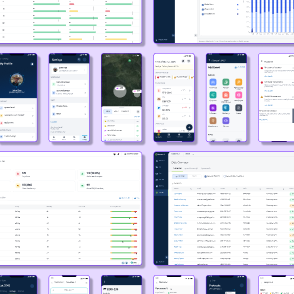
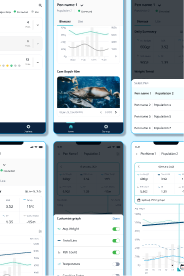
SenseHub is at the forefront of innovation in livestock management, offering cutting-edge solutions to help farmers make data-driven decisions. As the company grew it started acquiring various startups that offered technological solutions for livestock. The business decision was to place all these products under the SenseHub brand.
I own this project from its beginning—defining needs, designing the structure, establishing workflows, building the team, creating workshops and more.
Company
MSD Animal Health
Technology Labs
Role
Design System Specialist
Timeline
2021-Ongoing
Tools
Figma, Supernova
Team
Alon Rom- Dev Team Lead
Noam Mani- Senior Architect
Sapir Bachar- Designer
Because each species had its own colors and UI nuances, the system needed to be fully white-label to support these variations.
Communication gaps across global teams caused inconsistency; we needed a way to align everyone and work efficiently.
Updates were unmanageable, requiring a scalable way to speed the redesign and maintain future changes.
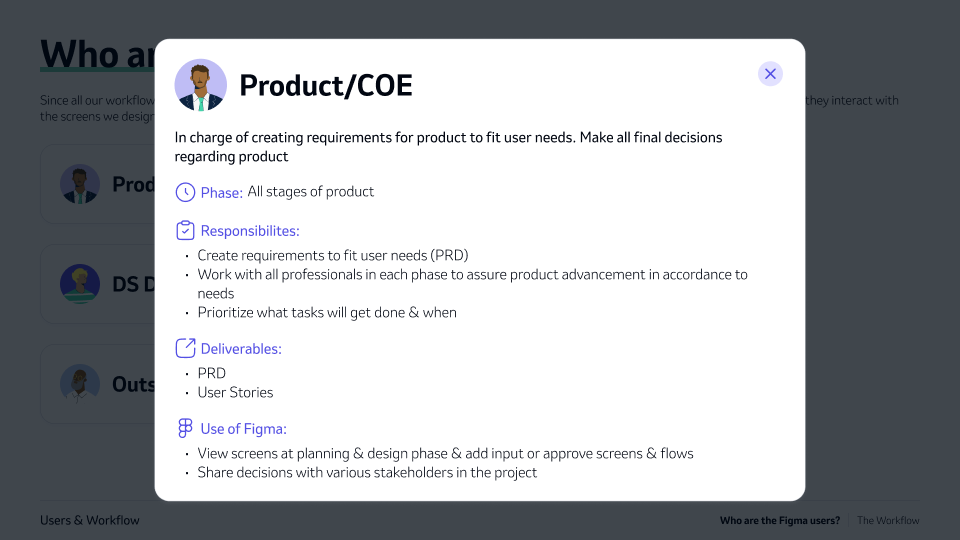
Defining User Roles
User-type mapping guided the architecture, and having colleagues as users simplified refinement.
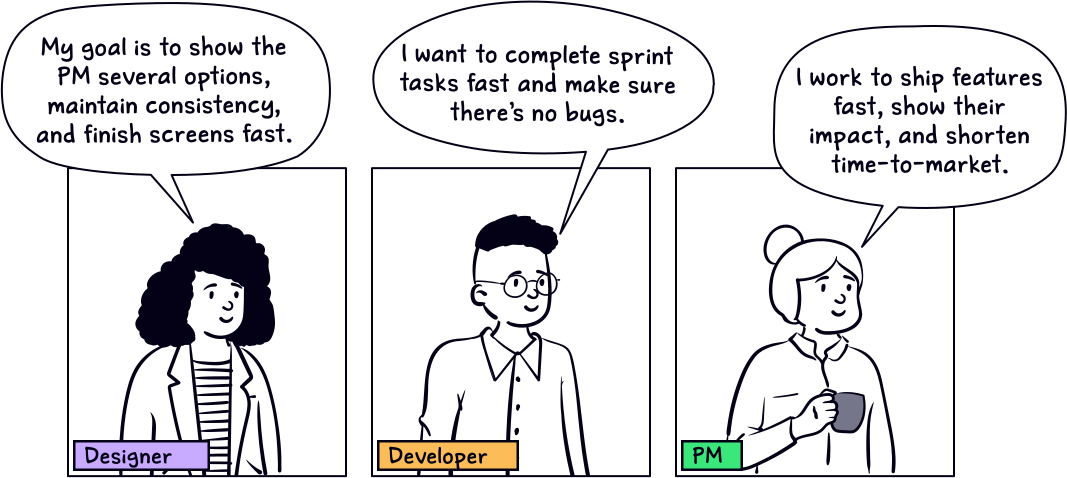
Defining User Roles
User-type mapping guided the architecture, and having colleagues as users simplified refinement.
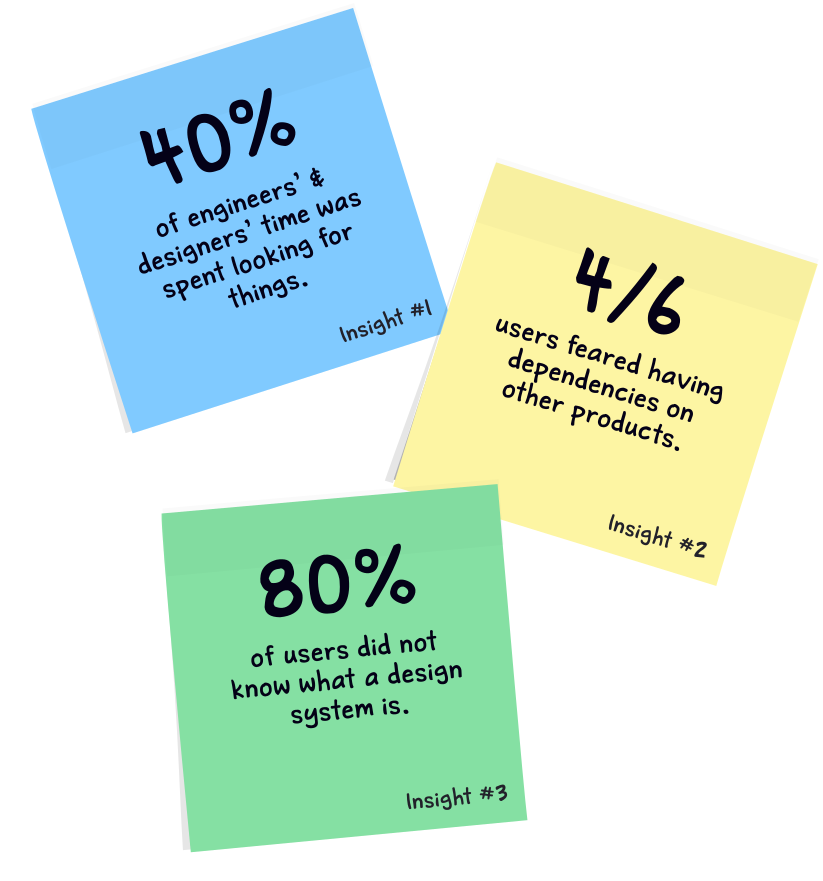
User Interviews
Focused on internal users to identify shared workflow pain points.
User Interviews
Focused on internal users to identify shared workflow pain points.
User Flows
Mapping main flows clarified that we needed to start with a well-documented component library.
User Flows
Mapping main flows clarified that we needed to start with a well-documented component library.
Understanding The Products
Mapped the products from a UX perspective to confirm they fit one design system, and they all did.
Understanding The Products
Mapped the products from a UX perspective to confirm they fit one design system, and they all did.
Setting Goals
With many goals, we had to prioritize to know where to start.
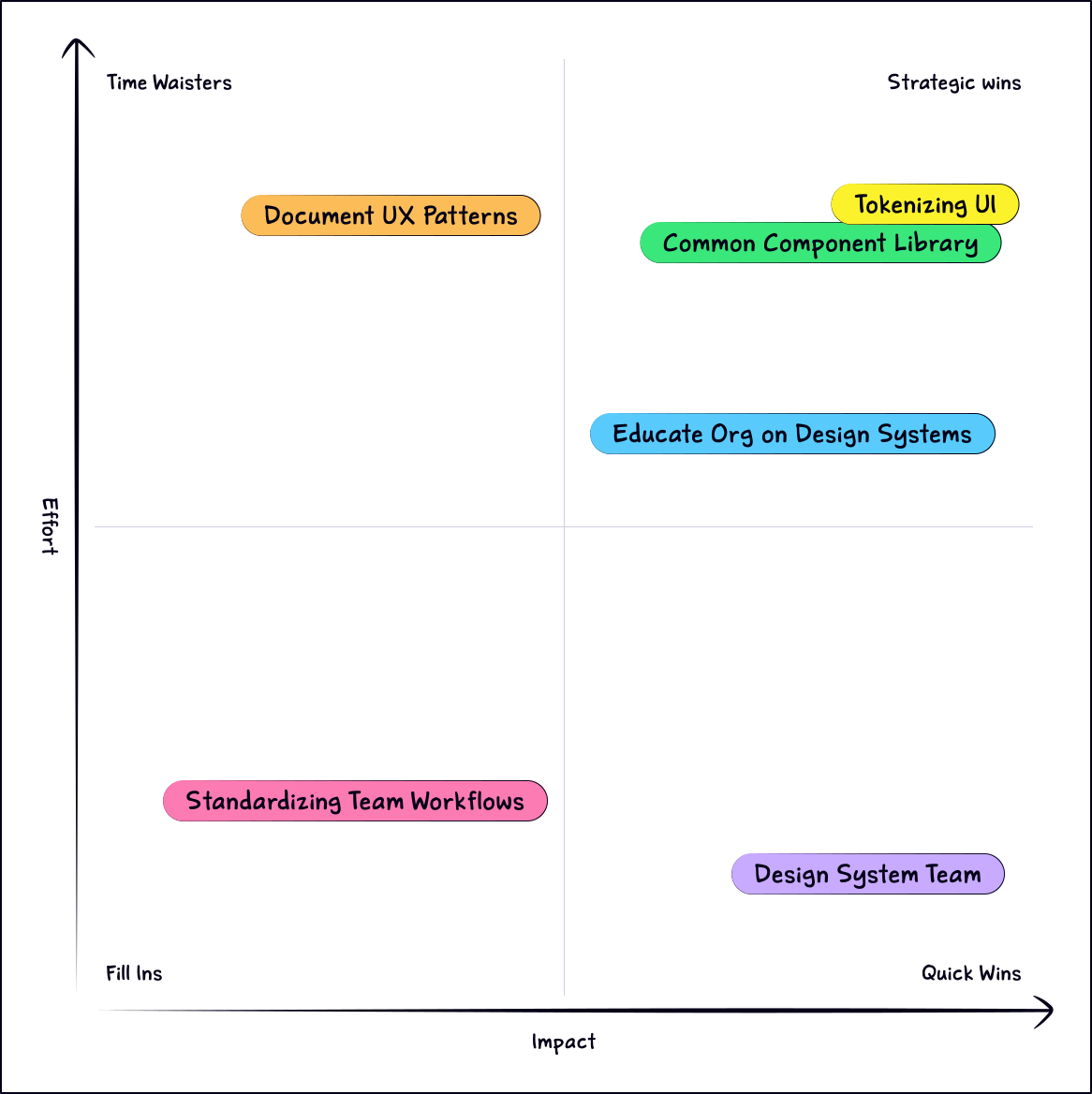
Setting Goals
With many goals, I had to prioritize where to start.
I formed the founding team responsible for driving the solution forward.
Team Structure
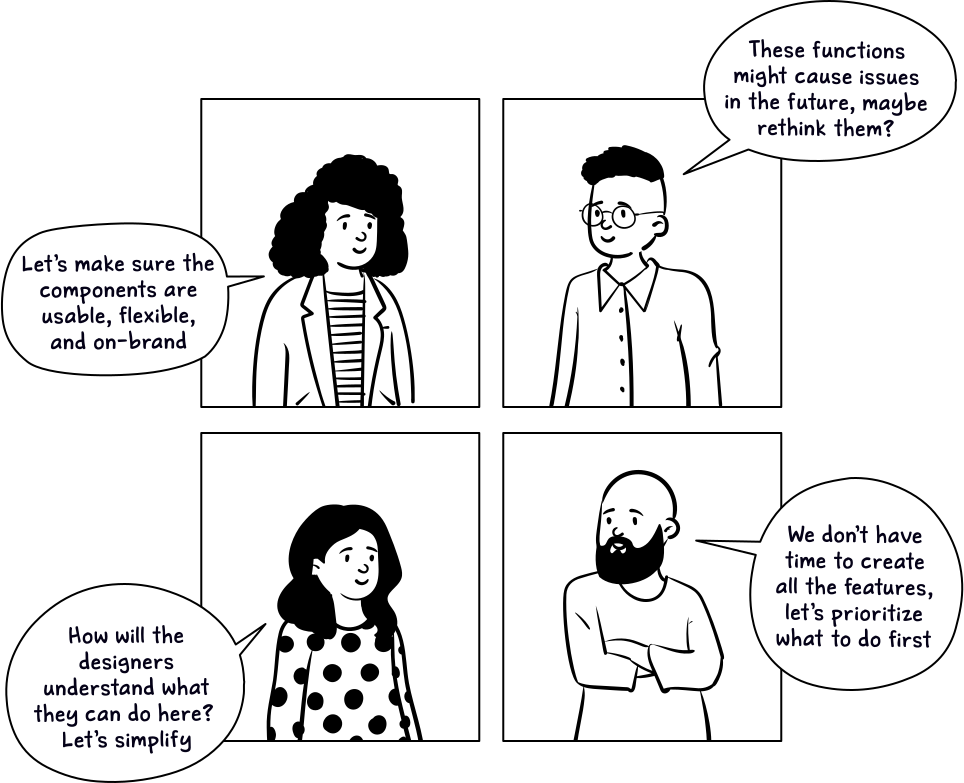
The team includes two designers and two developers that meet weekly to align details, define architecture, build & maintain components.
Defined the core values the system goes by.
We implement features upon request while supporting growth and future needs.
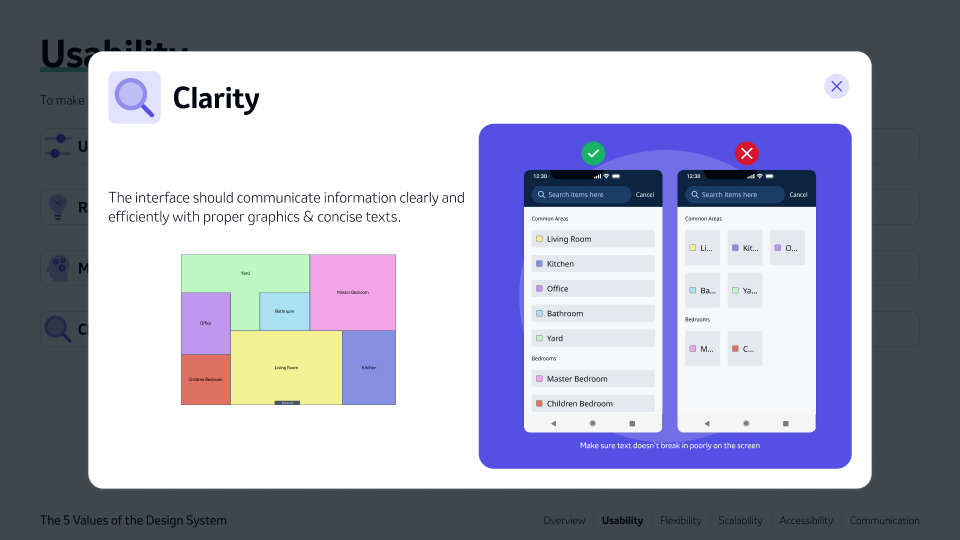
We focus on making our products easy and efficient for users to achieve their goals.
We design our components to be flexible, meeting the needs of each product.
We make sure to stay accessible at an AA level, under MSD’s guidelines.
We ensure designers and developers are aligned on every decision.
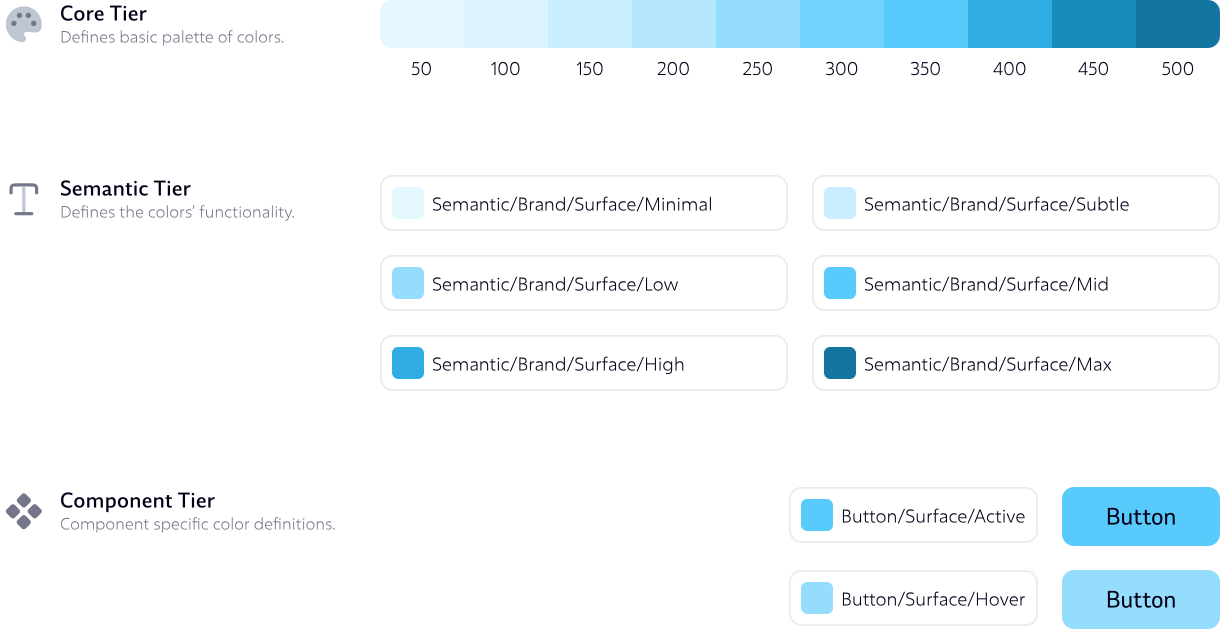
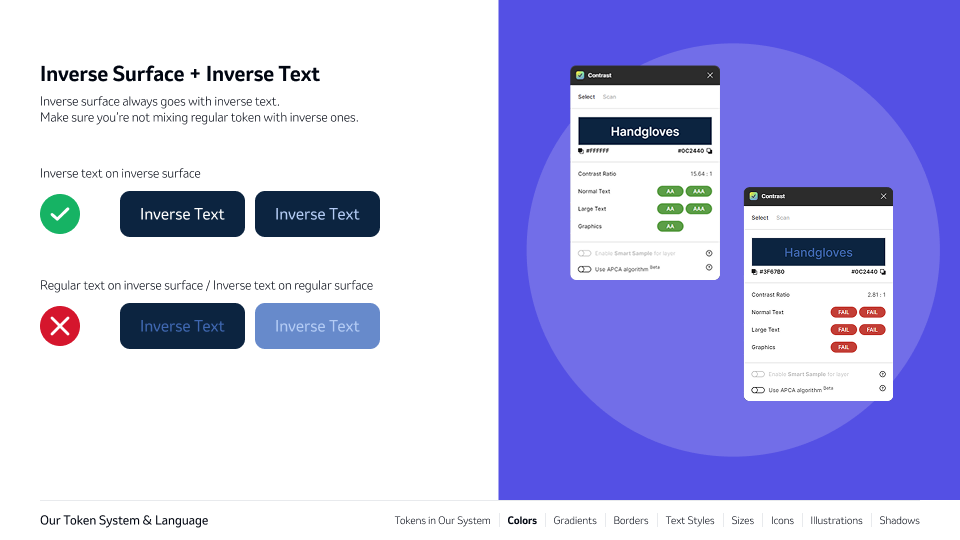
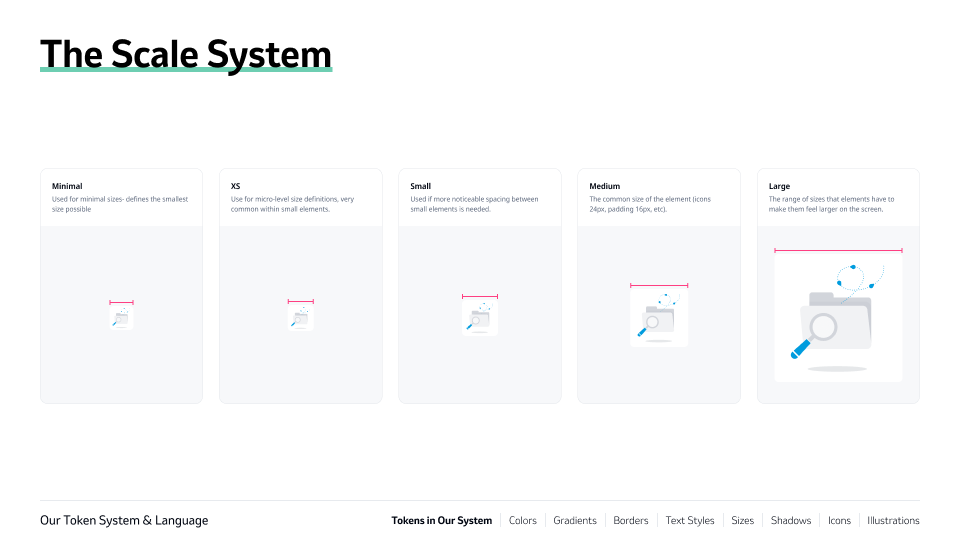
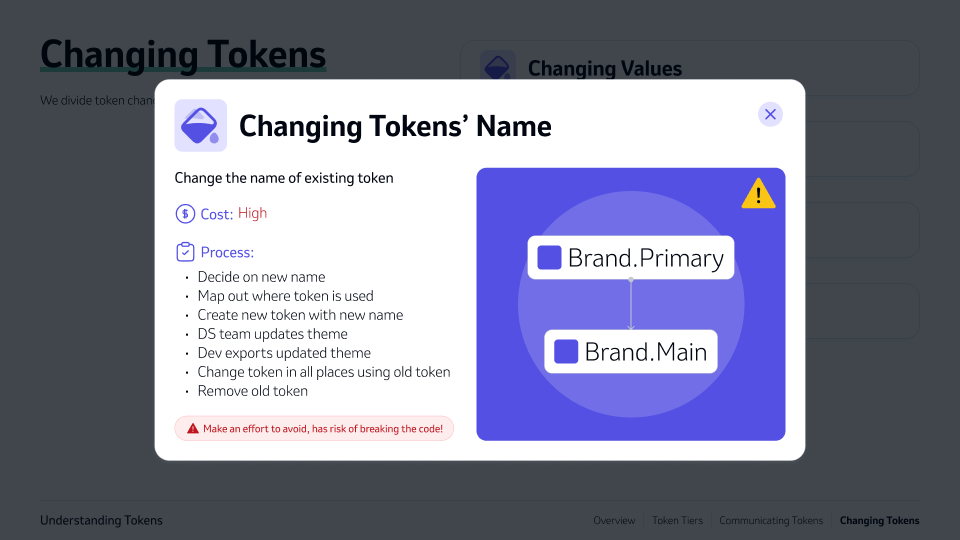
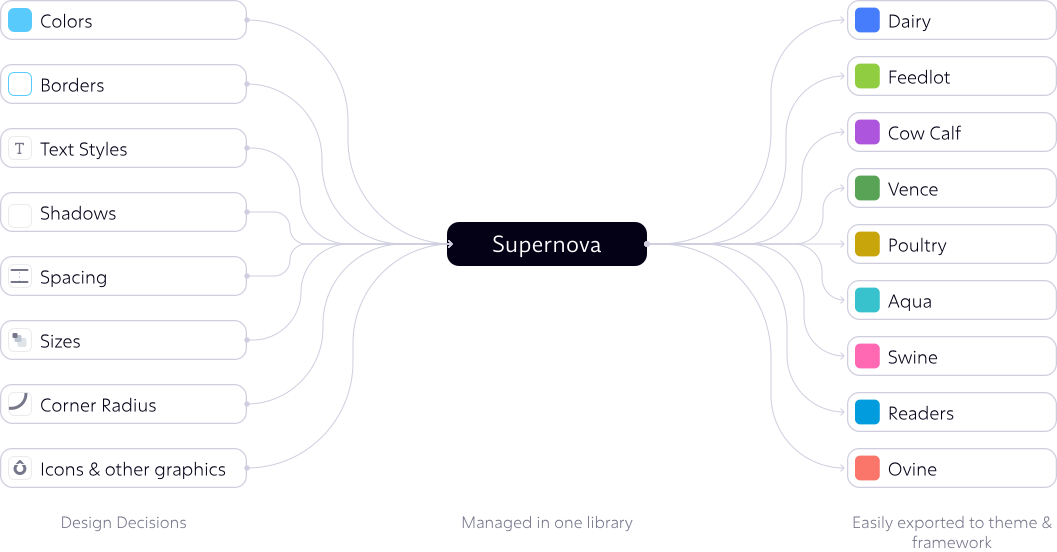
Tokenized the UI for more flexibility and control.
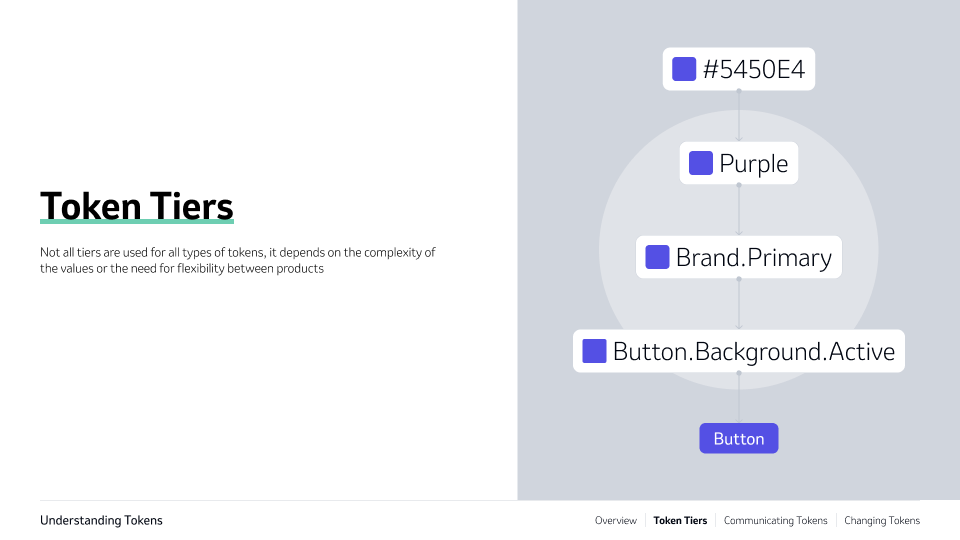
Token Tiers
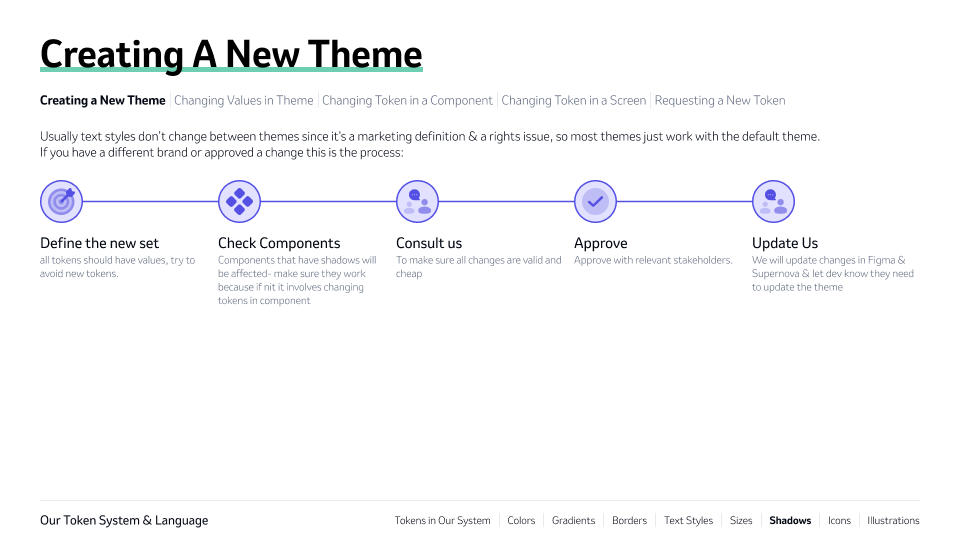
Created a three-tier token system for components and screens with simple, clear logic for designers.
Token Automation
Found Supernova- a tool for token automation and, with global teams, standardized it company-wide.
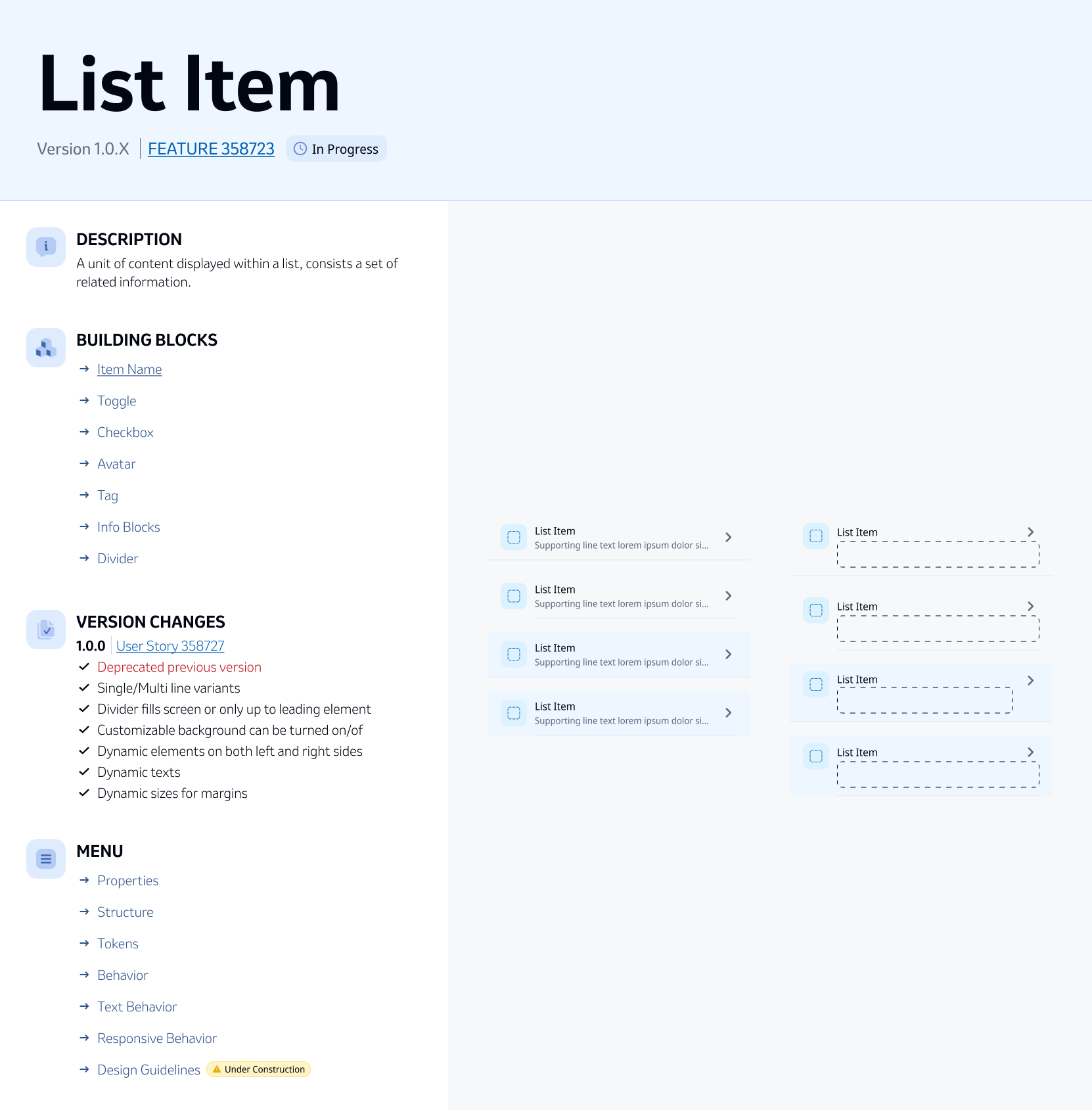
Created a full component library.
We set standards, documented components clearly, and implemented them in a shared repo for all products.
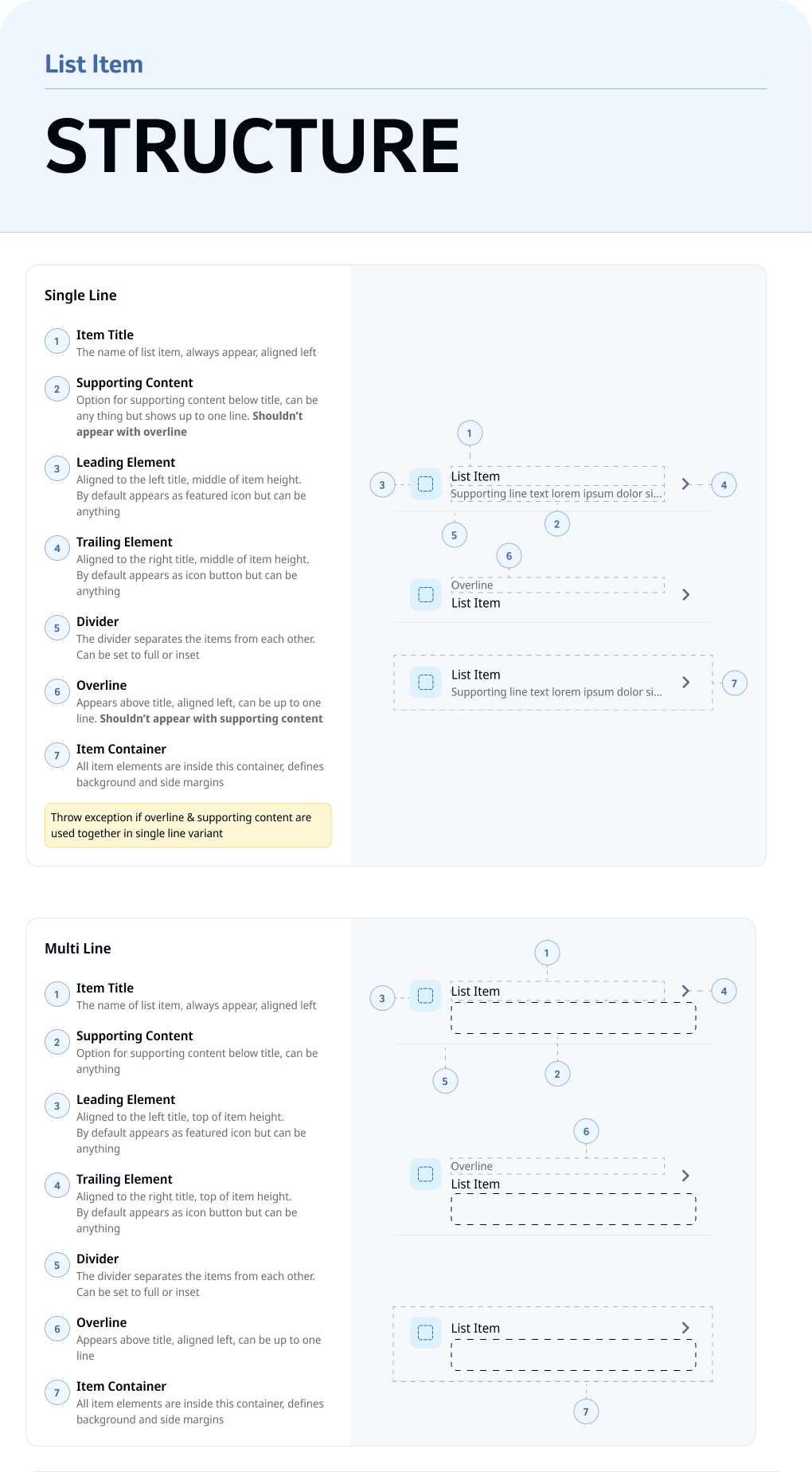
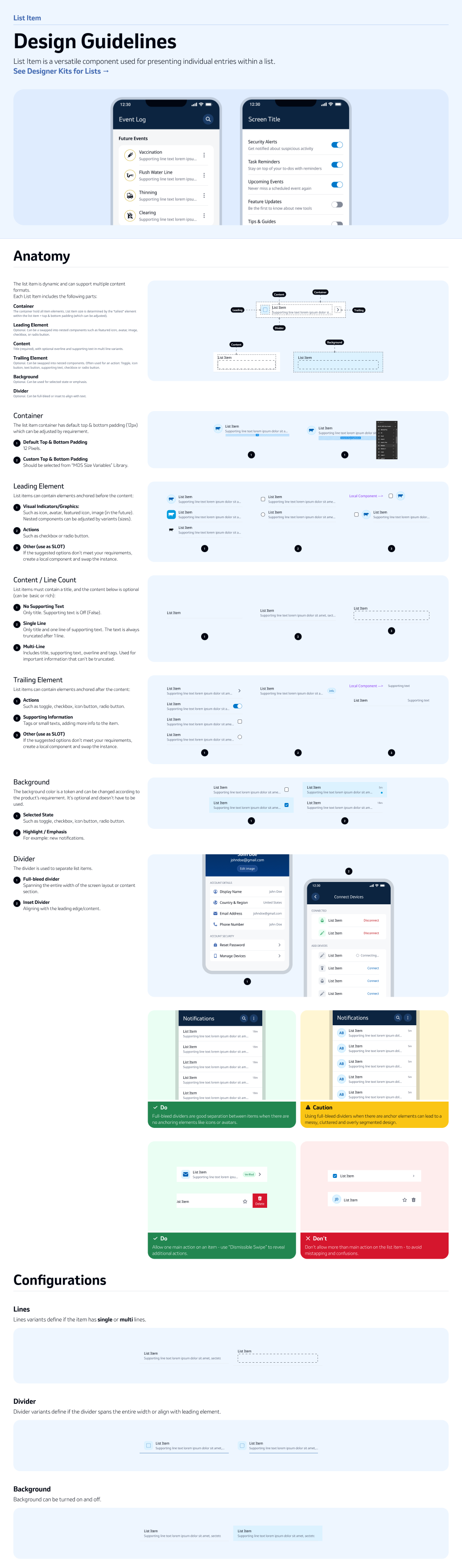
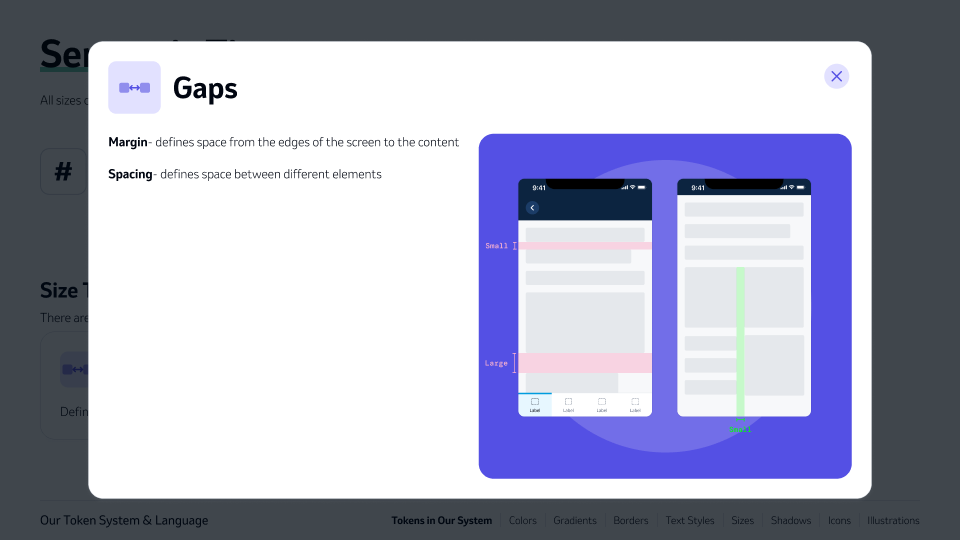
Component documentation example:


A high level overview of the component.
Component properties & variants in detail.
How the component is built.
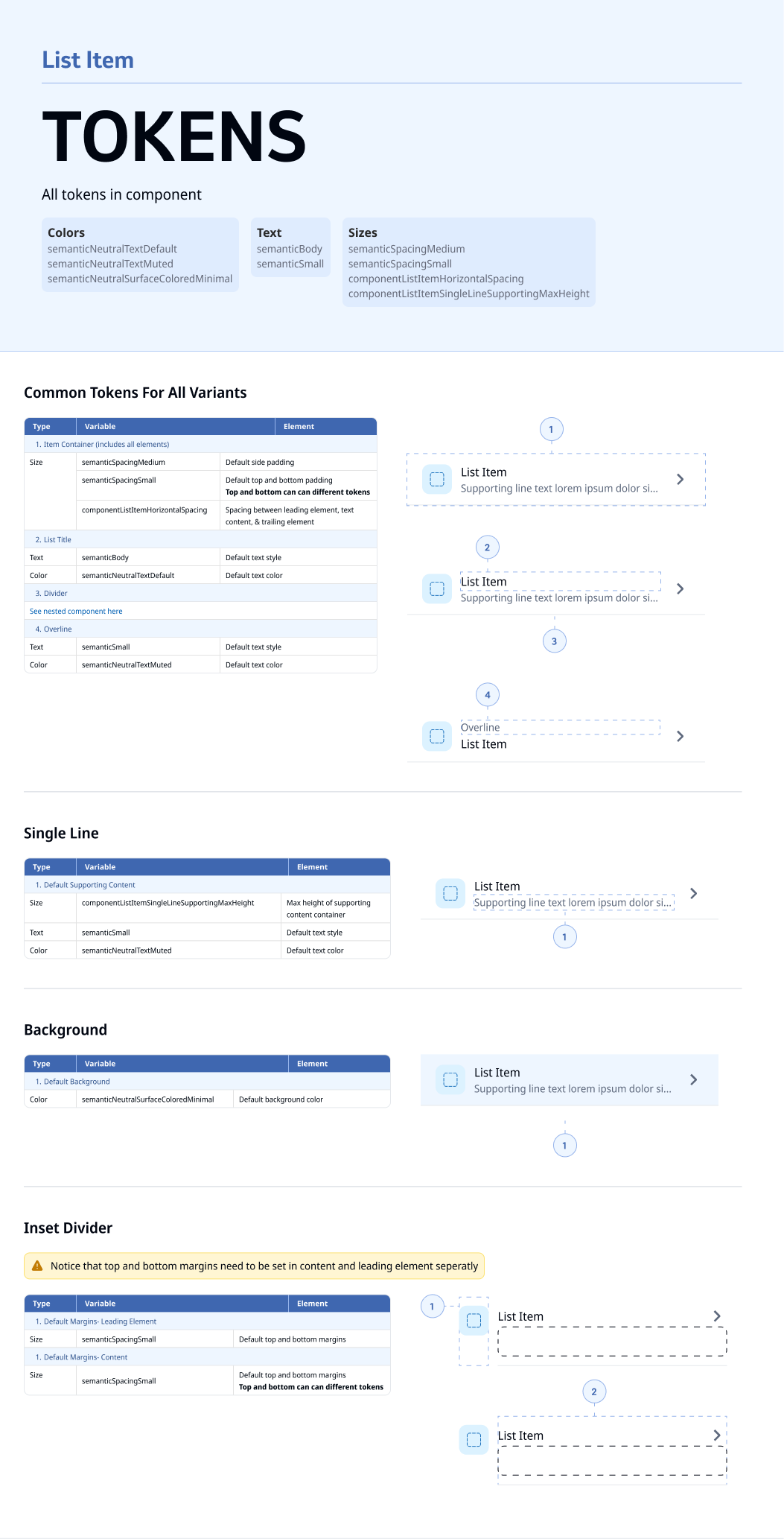
Detailed list of all the tokens the component uses.
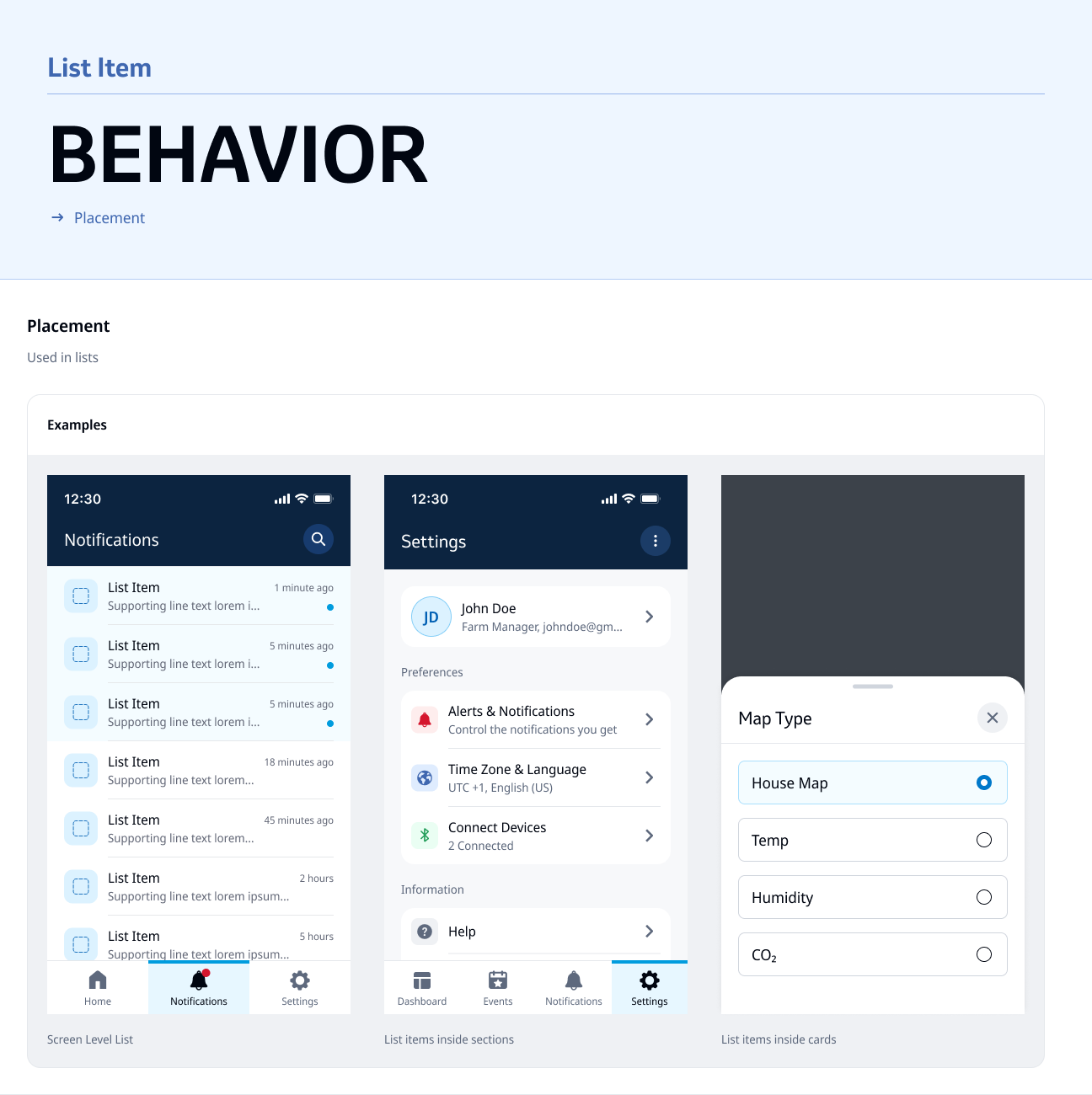
Interactive optins the component has and behavioral definitions not visible in the UI.
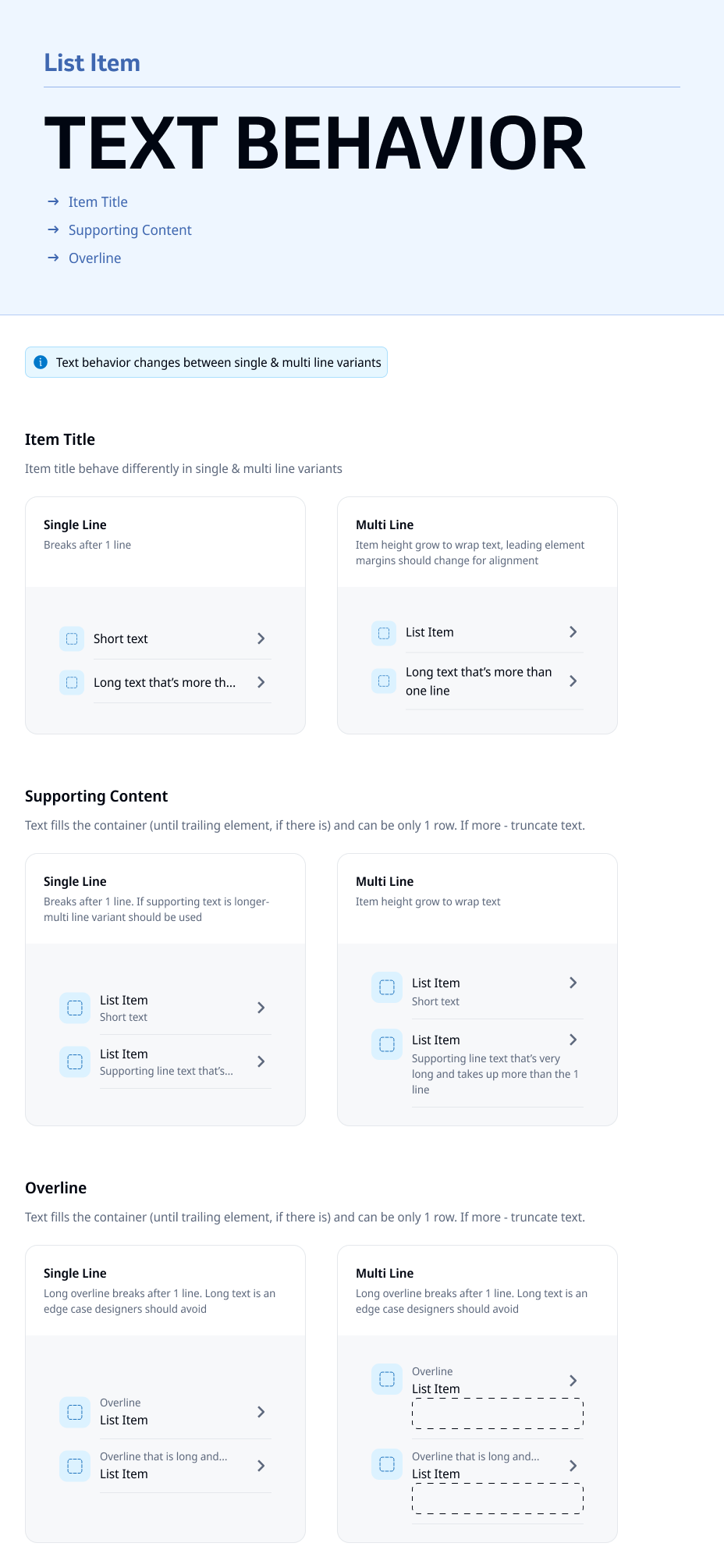
How text breaks, appears for every appearance of text.
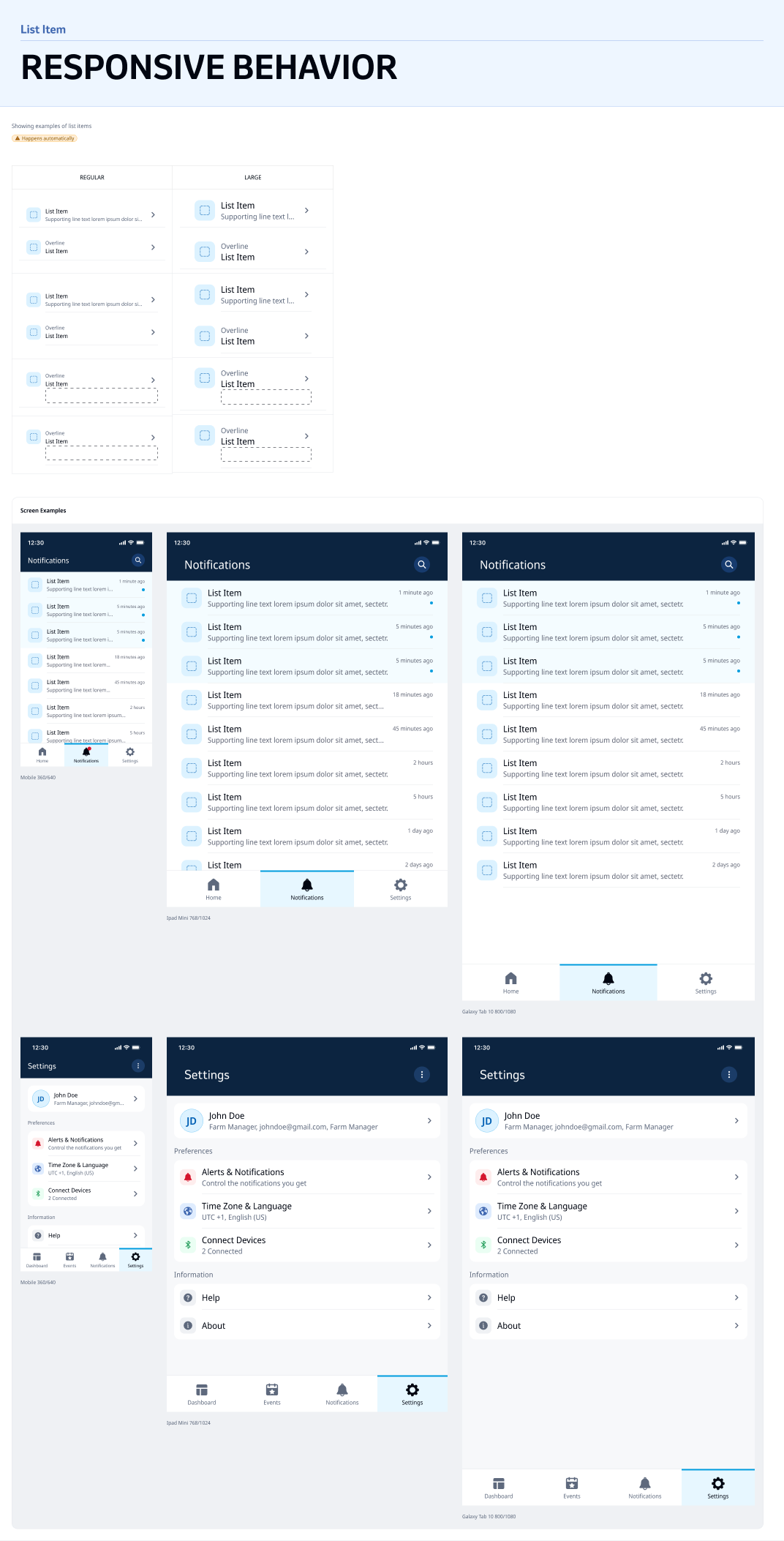
Upon request, we created a large size token set. The results of this set are mapped out here.
Detailed explanation for designers on how to work with the component.
01
I formed the founding team responsible for driving the solution forward.
01
I formed the founding team responsible for driving the solution forward.
02
Defined the core values the system goes by.
02
Defined the core values the system goes by.
We implement features upon request while supporting growth and future needs.
We focus on making our products easy and efficient for users to achieve their goals.
We design our components to be flexible, meeting the needs of each product.
We make sure to stay accessible at a AA level, under MSD’s guidelines.
We ensure designers and developers are aligned on every decision.
03
Tokenized the UI for more flexibility and control.
03
Tokenized the UI for more flexibility and control.
Token Tiers
Created a three-tier token system for components and screens with simple, clear logic for designers.
Token Tiers
Created a three-tier token system for components and screens with simple, clear logic for designers.
Token Automation
Found Supernova- a tool for token automation and, with global teams, standardized it company-wide.
Token Automation
Found Supernova- a tool for token automation and, with global teams, standardized it company-wide.
04
Created a full component library.
04
Created a full component library.
Component documentation example:
Versioning
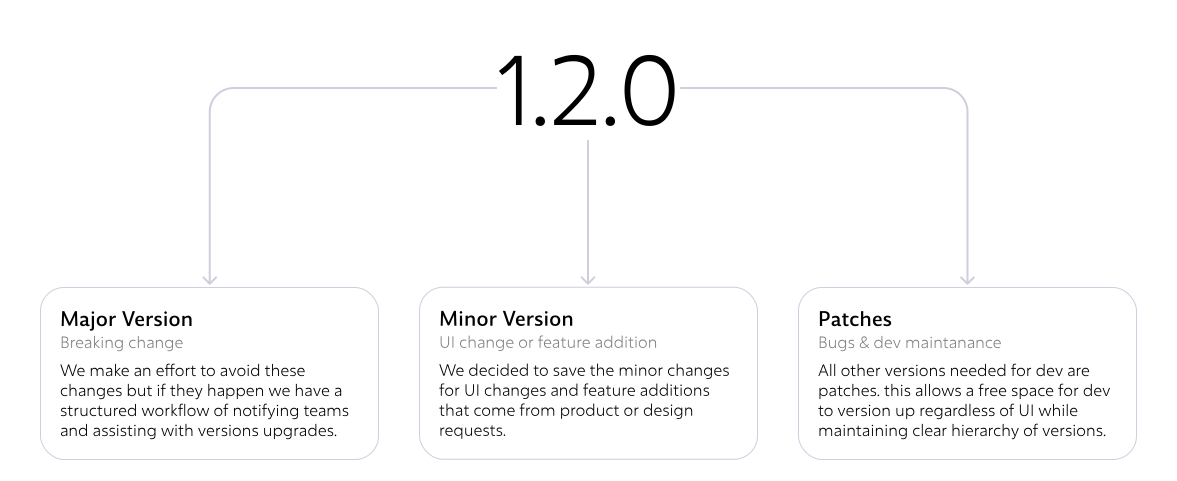
We specified our versioning system, using semantic versioning to our favor.
Versioning
We specified our versioning system, using semantic versioning to our favor.
Standard Workflow
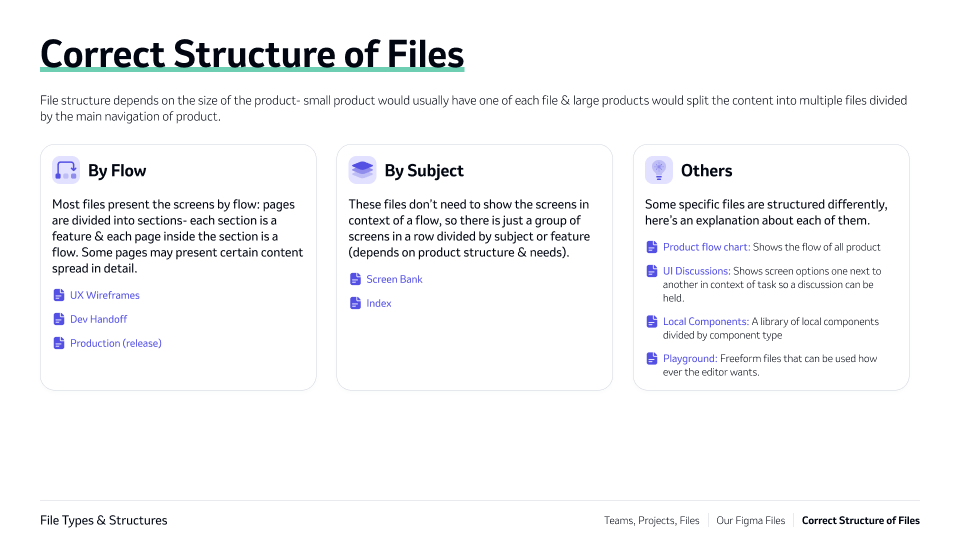
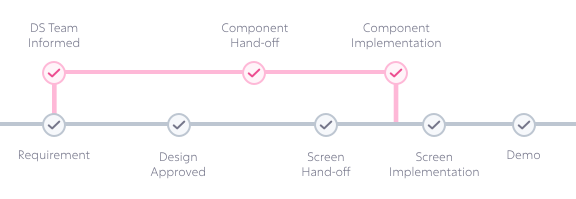
We defined clear workflows for component requests and contributions.
Standard Workflow
We defined clear workflows for component requests and contributions.
The new design system unified SenseHub’s visuals, components, and behaviors into one scalable structure. Tokens and reusable patterns improved consistency, reduced redesign overhead, and created a maintainable foundation for faster delivery across products and platforms.